
Some camera moves are hard because they are complicated. Others are hard because they are inconsistent: the floor changes, the pace changes, the director changes their mind, and suddenly yesterday’s “simple dolly” becomes a full reset.
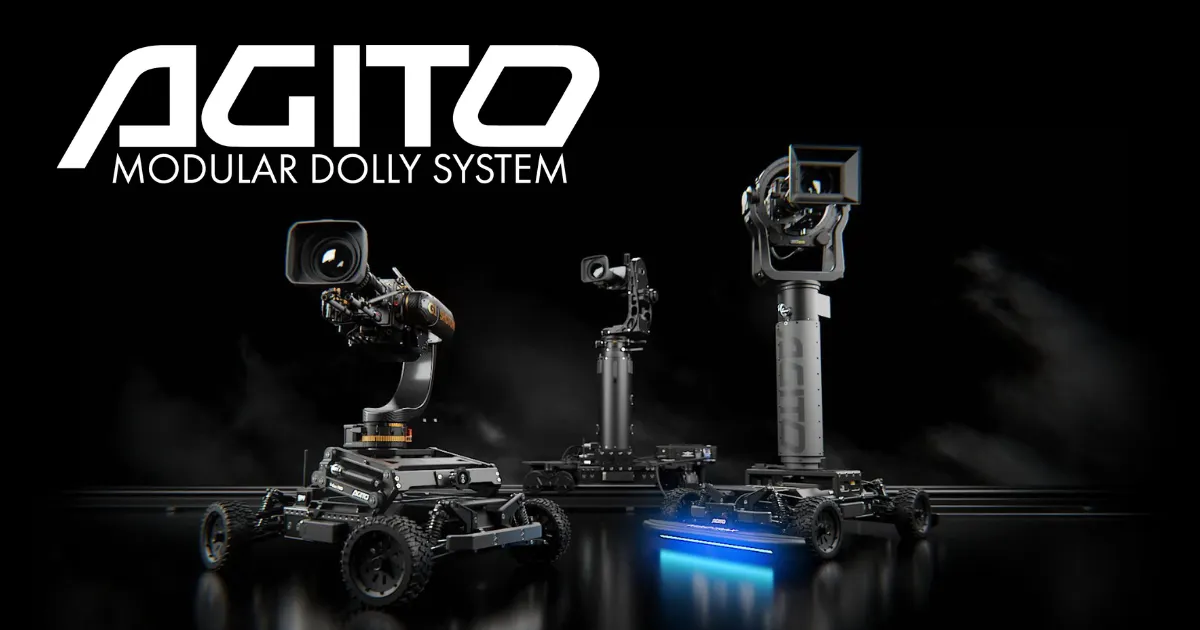
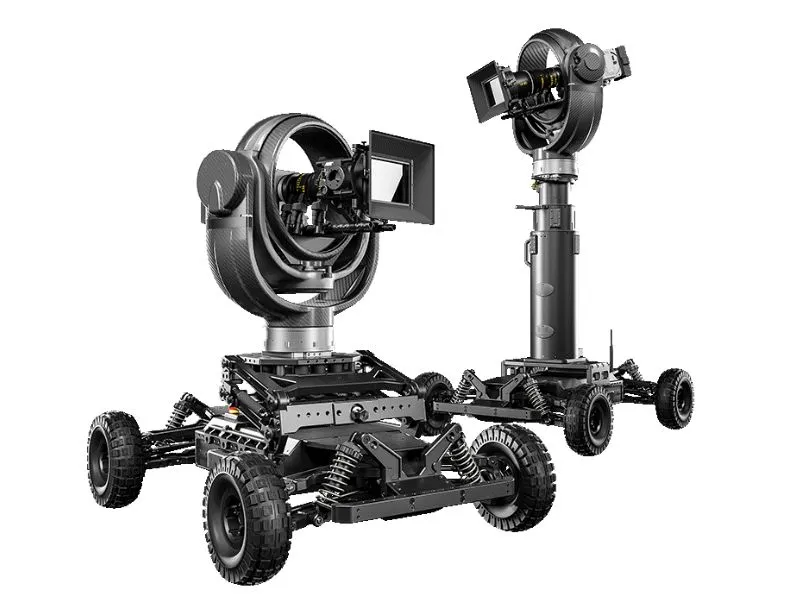
AGITO by Motion Impossible is built for that second kind of difficulty. It treats motion as a modular system, not a single rig with a single personality. One day, it is a free-roaming chase dolly on rough ground. The next day it is a repeatable studio track dolly. Later, it becomes a trackless “guided” dolly that follows an invisible path. It can even move overhead on a suspended rail.
That flexibility is not just convenience. It changes what crews are willing to attempt.
The shift from single-purpose dollies to modular motion
Traditional filmography tools tend to specialise. A classic track dolly gives you predictability, but it asks for time, labour, and floor access. A stabilised vehicle gives speed, but it can be bulky and loud. A crane adds height, but it brings a footprint and a crew.
AGITO’s approach is to keep the “heart” of the system constant and let everything around it adapt. The result is a motion platform that can move between environments and shot styles without forcing a production to rebuild its plan from scratch.
One sentence can sum up the design philosophy: keep the operator in control, and keep the rig ready to change.
Meet the Core: power, data, and controls in one place
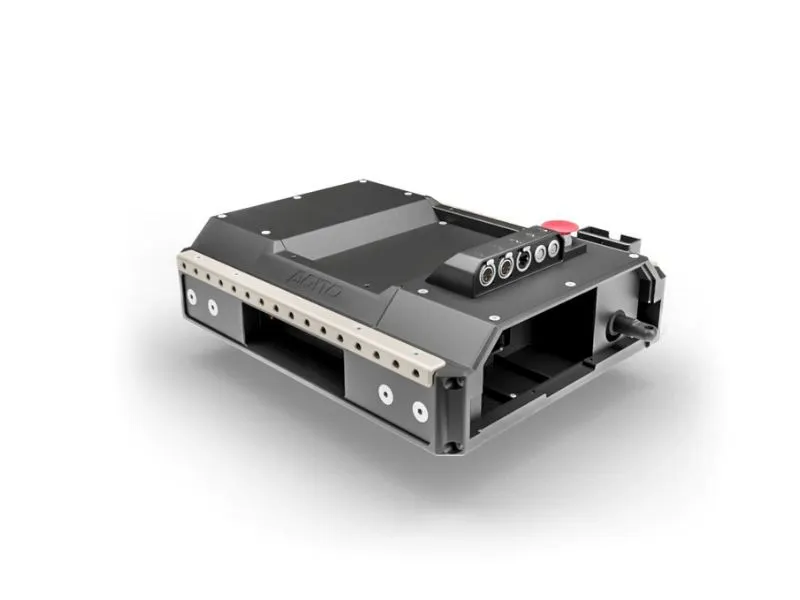
Traditional filmography tools tend to specialise. A classic track dolly gives you predictability, but it asks for time, labour, and floor access. A stabilised vehicle gives speed, but it can be bulky and loud. A crane adds height, but it brings a footprint and a crew.
AGITO’s approach is to keep the “heart” of the system constant and let everything around it adapt. The result is a motion platform that can move between environments and shot styles without forcing a production to rebuild its plan from scratch.
One sentence can sum up the design philosophy: keep the operator in control, and keep the rig ready to change. Meet the Core: power, data, and controls in one place
Control that feels like operating a camera, not a robot
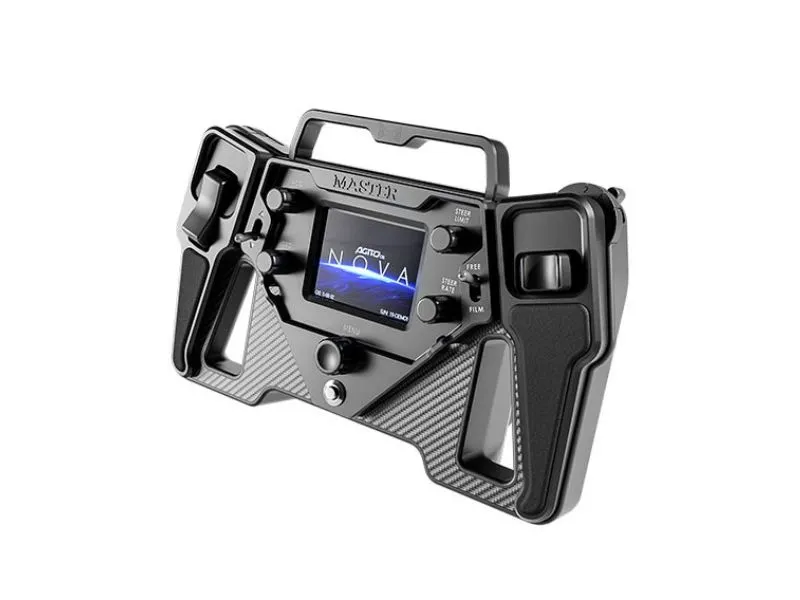
Remote motion lives or dies by two things: ergonomics and response. AGITO’s Master Controller is designed to be the brain behind every move, with tactile control that supports subtle starts, stops, and speed changes.
Precision controls use magnetic encoded rockers and adjustable speed and ramp parameters. In practice, that means you can tune how quickly the dolly accelerates, how gently it settles, and how it reacts when you need a mid-move correction. That “feel” is where shots become cinematic instead of robotic.
And when a move needs to repeat, recorded motion becomes a planning tool, not a trick. Repeatability supports VFX plates, multi-take performance beats, and live-to-live consistency when timing must match cues.
Four configurations, one vocabulary of movement
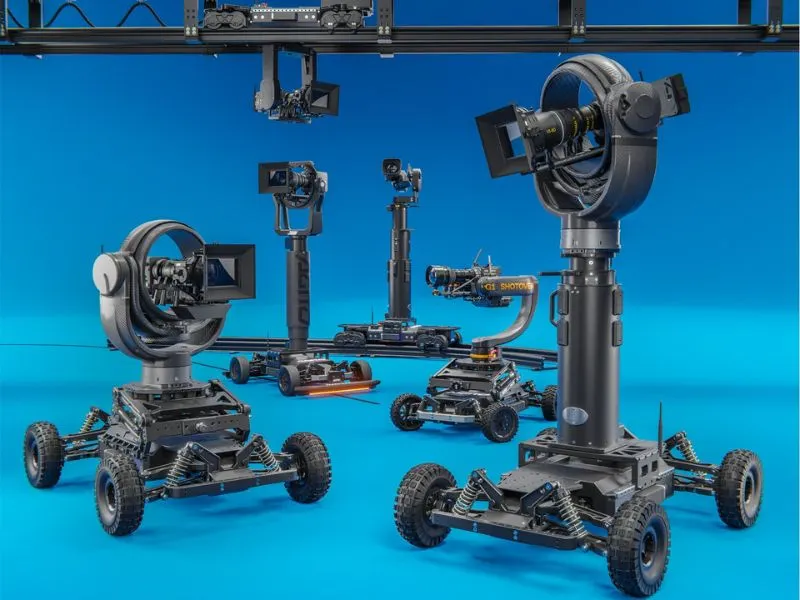
AGITO is often described through its configurations. The important point is not the list. It is what the list enables: one system that can cover terrain, track, guided paths, and overhead movement without changing the entire operating model.
Here is a practical comparison of the main modes:
| Configuration | What it becomes | Standout capability | Typical sweet spot |
| Sports | Free-roaming remote dolly | Precision down to 1.5 cm/s, up to 27 mph, 4WD with independent silent steering and suspension | Outdoor chase, sidelines, location work where surfaces vary |
| Trax | Remote track dolly | Secure and repeatable moves on track, tuned for studio smoothness | Sound stages, studio builds, controlled dolly language |
| MagTrax | Trackless guided dolly | Magnetic sensors follow strips for “track security” without permanent fixtures | Fast rig days, pristine floors, hidden paths on live shows |
| SkyTrax | Suspended rail system | Overhead, repeatable movement for complex multi-cam setups | Studios, arenas, ceiling grids, large set coverage |
Each mode solves a different kind of problem, yet they can be combined across a schedule so crews keep the same operational toolkit while shifting the physical setup. S
Sports: when “Dolly” starts behaving like a camera operator.
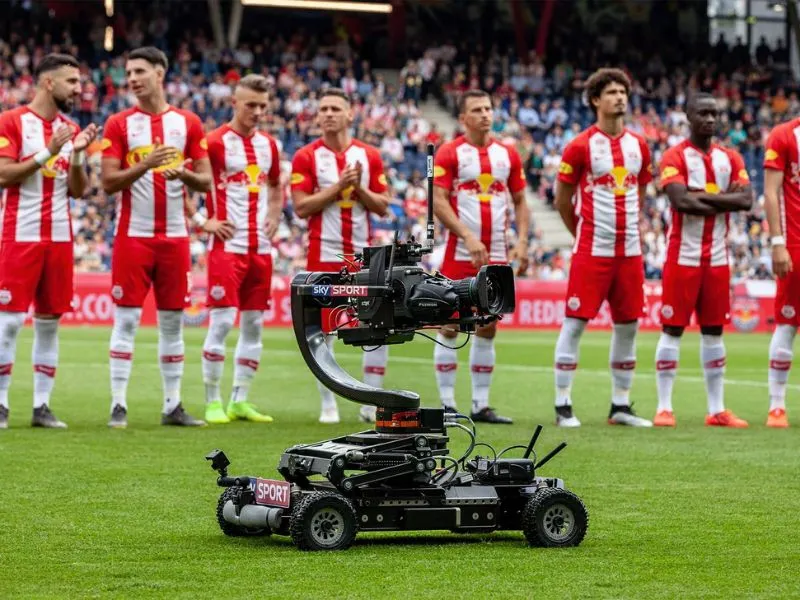
Sports configuration is where AGITO breaks away from the idea that a dolly belongs on a prepared surface. With four-wheel drive, independent steering, and suspension, it can track talent over grass, concrete, and mixed terrain while keeping speed control precise enough for slow, deliberate pushes.
That range matters because it reduces compromises. You can design a shot that begins as a quiet creep, then transitions into a fast chase, without cutting to hide a rig change.
It also changes blocking. Directors can stage action more naturally when the camera is not trapped by rails.
Trax and MagTrax: two paths to secure, repeatable movement
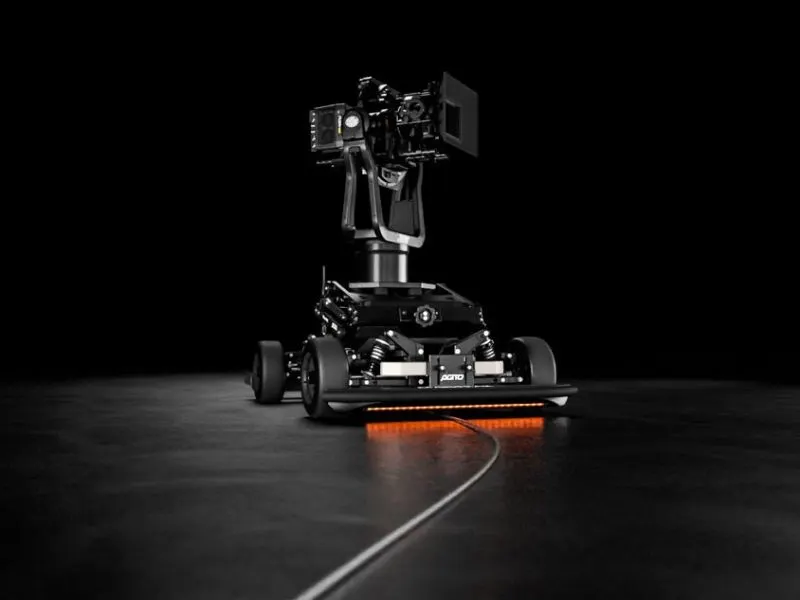
Trax turns AGITO into a remotely operated track dolly, which is still the gold standard for many studio moves. The value is not just smoothness. It is the confidence that the move will behave the same way every time, with the track acting as a physical contract between plan and execution.
MagTrax approaches that confidence differently. Instead of steel rails, it uses magnetic sensor guidance to follow magnetic strips, creating track security without permanent fixtures. That is especially useful when a space cannot tolerate track, when the floor must remain visually clean, or when the production needs to re-route paths quickly.
A magnetic strip can be placed, adjusted, and removed with minimal disruption, letting camera paths keep up with creative changes.
SkyTrax: overhead motion that stays usable all day
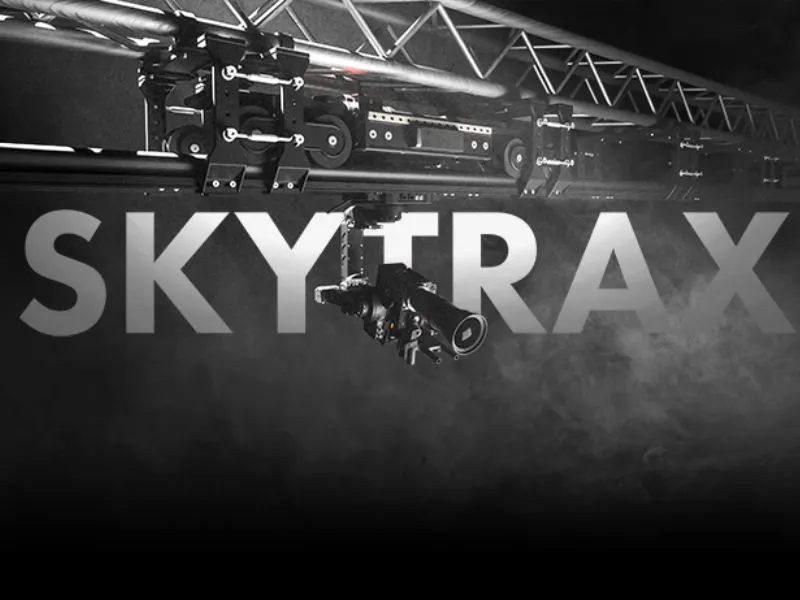
Overhead movement often looks incredible and feels painful. Truss, safety, cable management, and operator access can turn one camera into a major engineering effort.
SkyTrax transforms AGITO into a suspended rail system for smooth, repeatable overhead camera movement. Because it is designed as a system, not a one-off rig, it supports the kind of repeatable coverage that makes overhead worthwhile in multi-cam environments.
It is also a different visual language. Overhead motion can replace wide jib sweeps, connect geography in a set, or add quiet kinetic energy without distracting from performance.
Vertical motion without the crane footprint
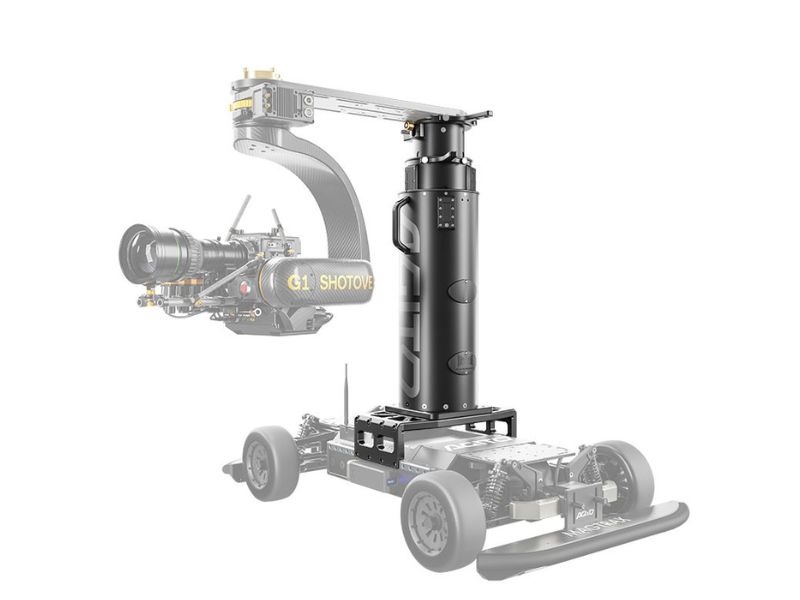
Horizontal movement is only half the story. AGITO’s vertical modules bring crane-like options into a tighter package.
The AGITO Column is a robust and silent vertical riser that supports both over- and underslung setups. That underslung option is not just a novelty. It enables low angles that stay stable and controlled, especially when paired with a remote head.
The AGITO Tower provides smooth vertical motion up to eye level, giving jib-like shots without committing to a full crane. It is a strong fit when a production needs frequent height changes across setups, or when the director wants to “find the shot” by riding the lens height during rehearsal.
For ultra-smooth, vibration-free stabilization near the ground, the V-Con Pro acts as a low-level vertical stabilizer. The practical benefit is simple: it helps the dolly move faster, or over less-than-perfect surfaces, while keeping the image composed and calm.
Quiet power: the drivetrain matters more than the spec sheet
A remote dolly that cannot coexist with sound is a niche tool. AGITO’s industrial-grade motors and quiet belt drive are designed for silent, smooth motion at both high and low speeds.
This is where engineering becomes aesthetic. Quiet systems let you shoot dialogue while moving, keep a performance intact, and avoid the “we’ll fix it in post” mindset that often follows noisy rigs.
One more detail is easy to overlook: smooth low-speed control. Many systems look great at medium speeds, then jitter when asked to drift forward at a crawl. AGITO’s focus on precision and ramp settings supports that slow, dramatic language.
Mounting and integration: building the rig you actually need
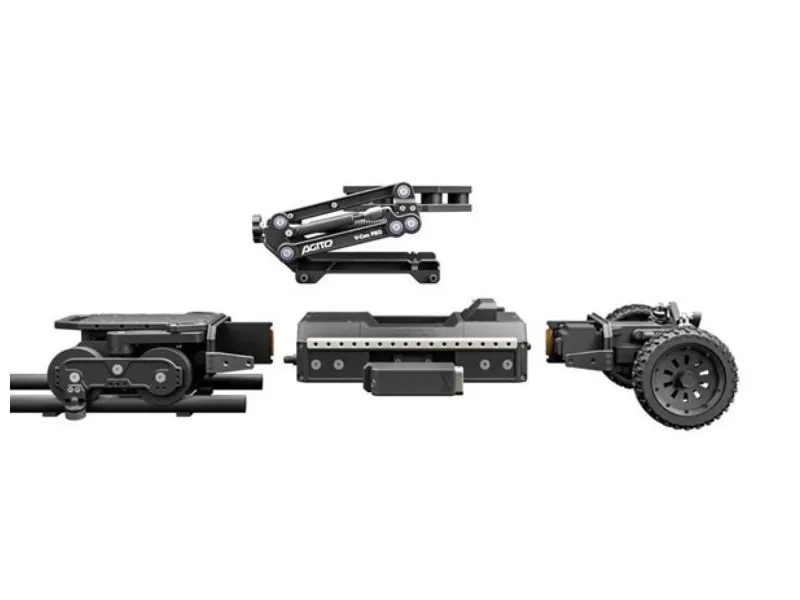
Modularity only helps when mounting is fast and flexible. AGITO supports fully adaptable mounting solutions with 3/8-inch and 1/4-inch threaded mounting points for quick lens height adjustments and accessory mounting.
That opens up practical builds: compact cinema packages, broadcast-style remote heads, gimbals, wireless video, lens control, and monitoring. The point is not a single “approved” configuration. The point is the freedom to build what the day requires.
After a paragraph like that, it helps to name what crews tend to standardize:
- Low-mode beauty passes
- Eye-level walk-and-talk tracking
- Underslung reveals
- Two-axis remote head coverage
- Multi-take repeatable moves
When a platform supports these without a fight, time returns to lighting, blocking, and performance.
Shot patterns that become easier to attempt
AGITO can be used for spectacle, but it shines when it makes difficult shots feel routine. That shift changes creative behaviour. When crews trust that a move is repeatable, they can design bolder blocking and more layered staging.
A few patterns show up again and again in real production thinking:
- Stage exits and entrances: Keep the camera close, stay discreet, and match the pace of live action.
- Arc moves without visible track: Use guided paths that stay secure while keeping floors clean.
- Terrain transitions: Start on a hard surface, continue onto grass, and keep the shot alive.
- Overhead continuity: Tie a set together with repeatable top coverage that can run all day.
None of these requires redefining the system. They require choosing the right configuration and tuning the control response for the moment.
A planning mindset that gets the best out of AGITO
AGITO rewards crews who treat motion like a department, not a last-minute add-on. That does not mean over-planning. It means planning the variables.
After you decide what the shot should feel like, the rest becomes a set of controllable choices:
- Path design: Decide whether you want free roam, physical track, magnetic guidance, or overhead rail.
- Speed and ramps: Dial acceleration and deceleration to match the performance, not just the blocking.
- Rig height: Choose Tower or Column when the emotional read of the scene depends on lens height changes.
- Sound expectations: Plan movement that can live comfortably inside dialogue coverage.
- Reset strategy: Record moves when repeatability will save time, protect performances, or support VFX.
That mindset is where “one system” starts to feel like a full motion toolkit.
What “impossible” really means on set
“Impossible” rarely means a shot cannot be done. It usually means the shot cannot be done today, with this crew size, in this space, within this schedule.
A modular remote camera dolly shifts that equation. It allows motion to be selected rather than suffered, and it encourages directors and DPs to keep movement in the language of a scene instead of treating it as a luxury.
And when motion becomes dependable, creative risk starts to look a lot more practical.